Part 3|Of Memory and Pathways

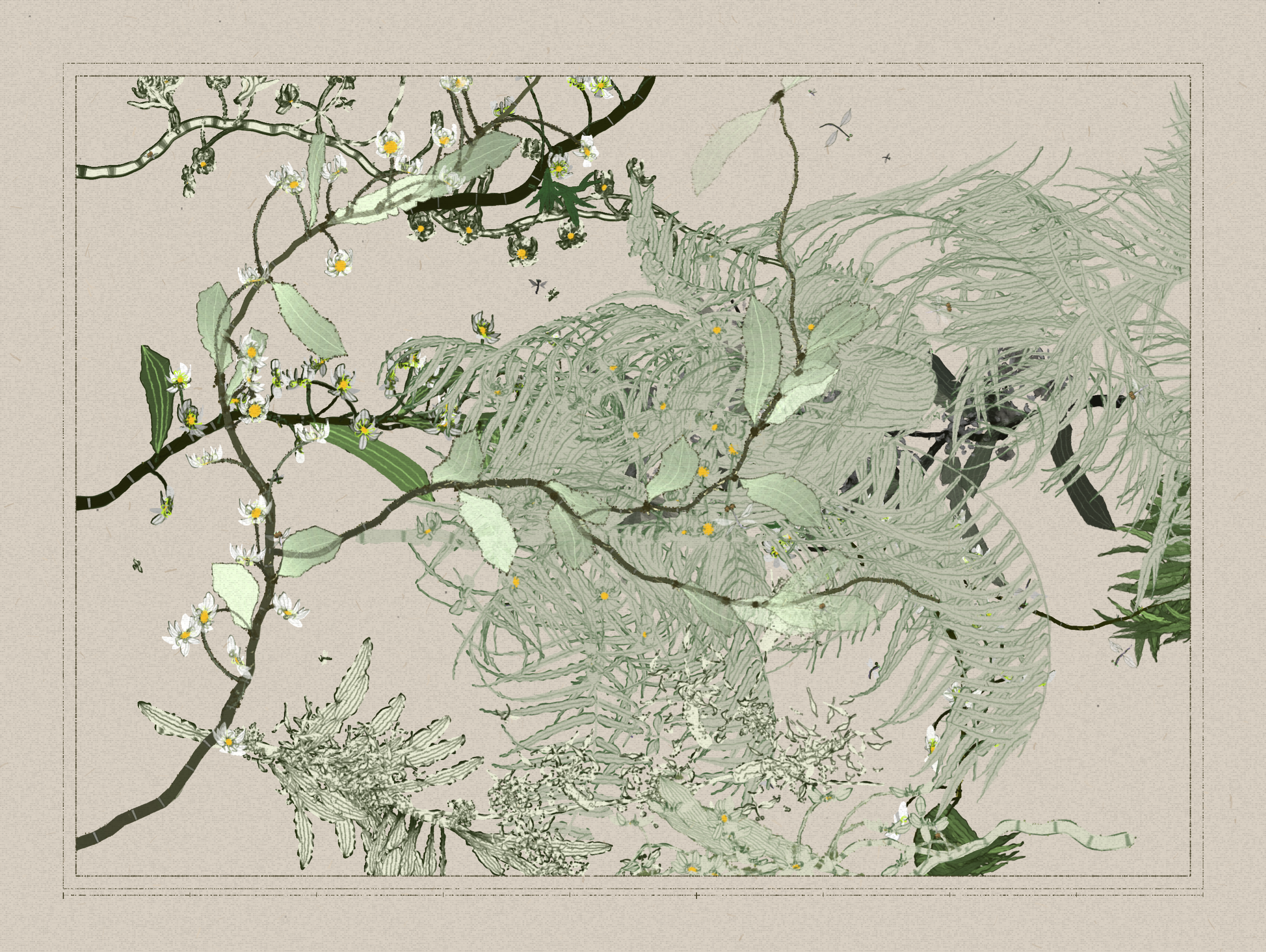
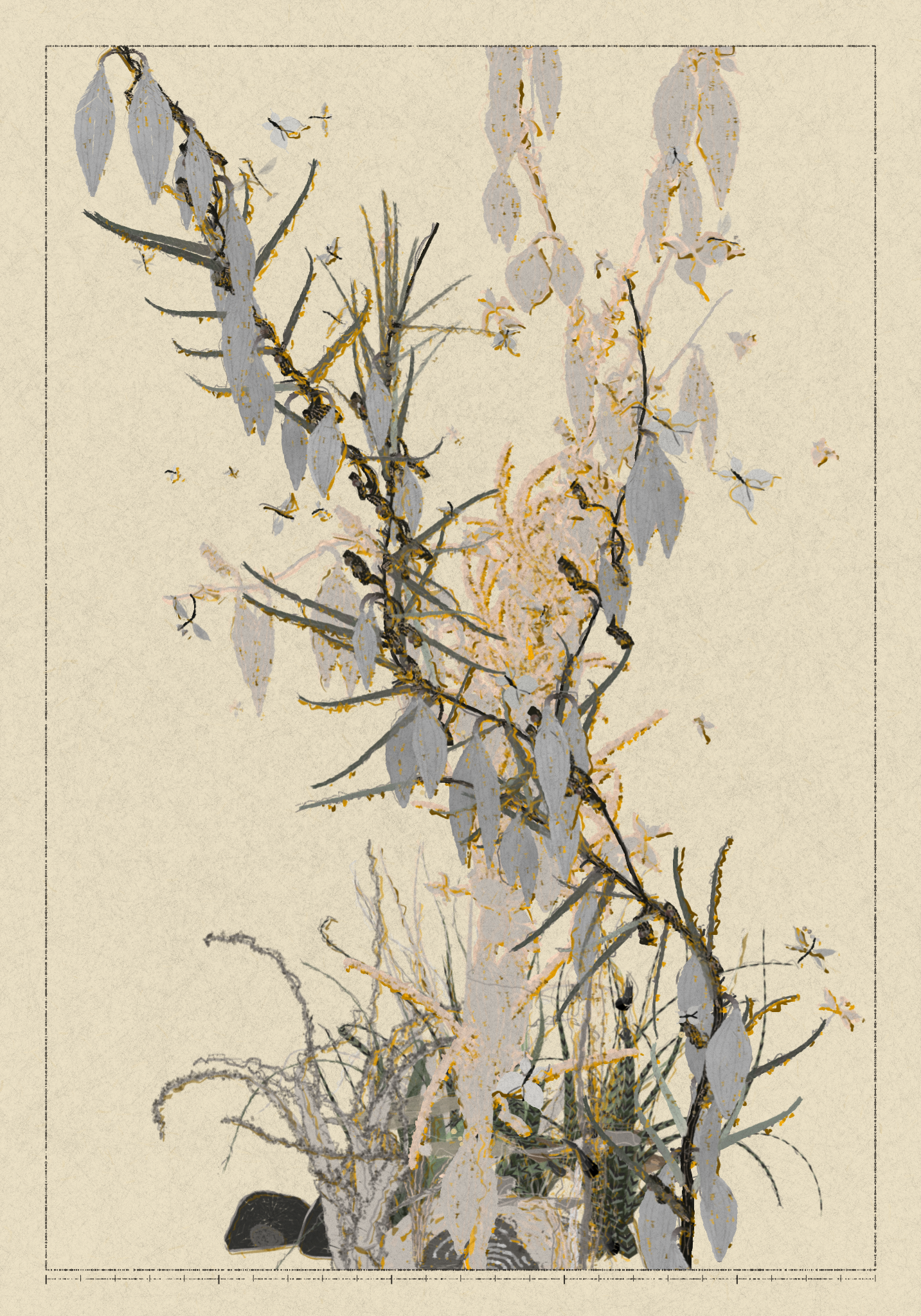
In PolyPaths, there is a kind of plant that doesn’t grow from itself.It doesn’t establish a trunk, nor seek its own direction.Instead, it spirals upward, gently clinging to the remembered path of a previous plant.These are the vines.They are born only under rare and specific conditions—through a narrow and exacting gate.The system dictates: only when a plant is nearly branchless, structurally minimal, and physically slender,its original identity is quietly erased.At that moment, the system relinquishes its typical growth logic, and generates a parasitic, winding replica.

This vine does not grow on its own initiative.Instead, it humbly reads the recorded path left behind by another plant (globalHighestPoint.path).Here, the aesthetic of the algorithm comes alive:spirals are drawn through trigonometric functions (sin, cos), then softened with a layer of Perlin noise,giving this mathematically precise form a fragile, trembling kind of life.

As it follows the memory, the vine sometimes appears in front, sometimes behind.This isn’t visual randomness, but a deliberate spatial logic:the program checks the Z-coordinate of each point, layering back-facing segments beneath, and front-facing ones on top.This creates a sense of weaving—an illusion of passing through and wrapping around.The vine embraces what is not its own, and becomes one with it.

I love this logic.It echoes the essence of polypaths: a plant that doesn’t decide its own way, but reinterprets someone else’s.Not all plants must stand alone—some emerge as responses, not beginnings.Each growth can extend a previous node, echo a former branch.What you’ve passed through doesn’t vanish.What you leave behind will, someday, be entwined.

I love this logic.It echoes the essence of polypaths: a plant that doesn’t decide its own way, but reinterprets someone else’s.Not all plants must stand alone—some emerge as responses, not beginnings.Each growth can extend a previous node, echo a former branch.What you’ve passed through doesn’t vanish.What you leave behind will, someday, be entwined.


在《植徑集》裡,有一種植物不從自身出發。它不建立主幹、不尋找自己的方向,而是沿著前一棵植物的記憶路徑,螺旋向上,緩緩攀附——他們是藤蔓。這些藤蔓,只在極少數的條件下誕生,是一道極其嚴苛的窄門。系統的規則寫著:只有當一棵植物被命定為 幾乎不分岔 、結構足夠簡單,且體態纖細,那份屬於它自己的主體性才會被抹除。此刻,系統會放棄它本來的結構,轉而生成一個纏繞的、寄生的副本。

它不主動生長,而是謙卑地「讀取」上一棵植物留下的路徑數據 (globalHighestPoint.path)。演算法的美感在此刻展現:程式以三角函式 (sin, cos) 描繪出工整的螺旋軌跡,再疊加一層 Perlin 噪聲 (noise),賦予了這數學般精準的纏繞一絲有機的、顫抖的生命力。

藤蔓沿著記憶的路徑,時而在前,時而在後。這並非視覺上的偶然,而是程式對三維空間的冷靜判斷:它檢查著每個點位的 Z 軸座標,將位於後方的片段繪製於下層圖層,前方的則繪於上層。於是,藤蔓實現了視覺上的「穿梭」,它擁抱、纏繞,最終與那段不屬於它的枝幹融為一體。

我很喜歡這個邏輯,跟polypaths 有種呼應:一株植物寄生在前一株植物的記憶裡,不重新決定方向,而是重新詮釋方向。未必都是一棵棵獨立的植物,而是一條條交錯的路徑。每一次生成,都可能延續前一次的節點、呼應上一次的分岔。

你走過的,不會消失;你留下的,終將被纏繞。

Part 2|A Leaf That Knows Before It Speaks

In PolyPaths, leaves don’t sprout immediately from the base or stem.

Much like in the natural world, many plants first lift their bodies upward before unfolding their foliage.

To echo this, the system delays the appearance of leaves, letting the growth process breathe — with tension and rhythm that feel more organic, more alive.

Behind the scenes, a parameter called ProgressStart controls this delay.

Each plant sets its own threshold, typically between 10% to 40% of its growth progress.

Only after reaching this benchmark do leaves begin to appear.

You can think of it as a kind of ecological strategy:

“Make sure I can survive, then invest in leaf surface.”

It’s also a form of visual restraint, allowing the structure of the plant to emerge with clarity and intention.

That’s why in many scenes, the lower segments of the stems are clean and sparse,

while leaves, flowers, and fruits cluster toward the middle or top.

This subtly guides the viewer’s gaze upward —

as if drawn by the plant’s will, inviting us to witness where it truly wishes to flourish.


Leaf Arrangements: Poetic Logic at the Node

When a leaf is finally ready to grow, its pattern follows one of three poetic grammars of botany:

Opposite, Alternate, or Whorled.

  • Opposite: Two leaves emerge symmetrically from the same node, like a pair of wings. The system places them at mirrored angles — 0.5 and PI-0.5 radians — relative to the branch.
  • Alternate: Leaves zigzag along the stem, one at a time, switching sides. A variable called alternateCount toggles the direction with each new leaf.
  • Whorled: Multiple leaves (usually 3–4) explode from a single node, arranged evenly in a circle. This uses a WhorledCount to divide the circumference and assign leaf angles.

Each plant randomly selects one of these patterns at birth,

but exceptions occur — especially near the branch tip, where whorled mode often kicks in.

This creates a visual accent, a kind of natural punctuation.

I’ve used this trick in previous works too, like Chaos Research, where Perlin noise surges near the path’s end — a kind of expressive burst, like the dry-brush flick of ink or an intentional splash.

I love that moment — when structure releases into spontaneity.


The Tip Holds a Secret

When growth reaches over 90%, a condition called progressFinalCheck is triggered.

At that moment, the system initiates a special growth logic for the apical tip of the stem.

Often, this results in a burst of whorled leaves (WhorledCount = 3) at the very top.

It’s less about realism, more a declaration:

“This is the plant’s highest reach toward the sun.”

If specialPlantMode is enabled, even more dramatic endings may occur.

For example, in SP2 — the “Rhododendron oldhamii mode” — a vivid cluster of green leaves appears at the top, signaling its botanical identity.


From Chaos Research to PolyPaths, I’ve been honing this choreography of hesitation and emergence.

Leaves never rush in.

一枝未語葉先知

就像自然界中許多植物會先「拉高身體」再展開葉子,

這套系統也刻意延遲葉片的生成時機,

讓生長過程呈現出更接近真實植物的節奏與張力。

在程式邏輯中,我設定了一個葉片的生成的啟動門檻:

變數為 ProgressStart,意思是生長進度需達到一定百分比之後,葉子才會開始長出來

這個百分比大多落在 10% 到 40% 之間,隨每棵植物隨機設定。

你可以想像它是「植物先確認自己能活下來,才決定投資葉面」,

這除了擬真生態的策略,更是視覺上的留白,讓植物的結構有種秩序。

也因此你會發現,很多畫面中,枝條下段常常是乾淨、單純的線條,

葉子、果實與花多集中在中後段,這讓觀看者的視線會不自覺向上移動,

像是被某種「植物的意志」引導著,去尋找它真正想開展的地方。


三種葉序:節點上的分身術

當葉子開始生成,它們會依照隨機指定的葉序邏輯展開。

這三種葉序——對生、互生與輪生,是植物語言裡非常基本卻富詩意的句型。

  • 對生 Opposite 每節生長點同時長出兩片葉子,左右對稱,像一對開口的翅膀。 系統會在相對的兩個方向各生成一片葉子,以 0.5 與 PI-0.5 的角度對稱配置。
  • 互生 Alternate 葉子在枝條上交錯生成,一次一片、左右輪替。 程式透過一個名為 alternateCount 的變數,在每次呼叫間切換方向。
  • 輪生 Whorled 是一種在同一節點上爆發出三至四片葉片的陣列式排列。 程式會根據隨機設定的 WhorledCount,將葉子平均分布在圓周上。

每棵植物在初始化時,會隨機被指派其中一種葉序,

但這並非絕對,有些特例條件下,葉序也可能被強制覆寫,

例如在枝條的末端,就常常會進入「輪生」模式——這是一種視覺上的重音,也是一種自然收束。

我在過往作品還常使用這個技巧,例如chaos research,perlin noise 的力道,會在路徑的結尾處大爆發,這也像是水墨的筆觸的刷白,或是潑濺,我很喜歡的技巧。


莖頂的秘密:最後一節,總是特別

當生長進度超過 90%,系統會觸發名為 progressFinalCheck 的條件,

啟動一套為莖頂設計的特殊生成邏輯。

最常見的情況,是在莖頂生成一簇輪生葉(WhorledCount = 3),

這種爆發式的結語,未必仿真,更像是在說:「這裡是植物吸收陽光的置高點。」。如果啟動特殊模式(specialPlantMode),莖頂則可能生成更具戲劇性的構造。在SP2也就是紅茄苳模式下,會長出一叢綠葉。


Chaos Research 到《植徑集》,我不斷練習這種節點上的判斷。葉子從不倉促地現身,它們等待適合的時機,然後,在對的位置,用驕傲的姿態說出自己的語言、邏輯。

Part 1|Scales Hidden in the Image

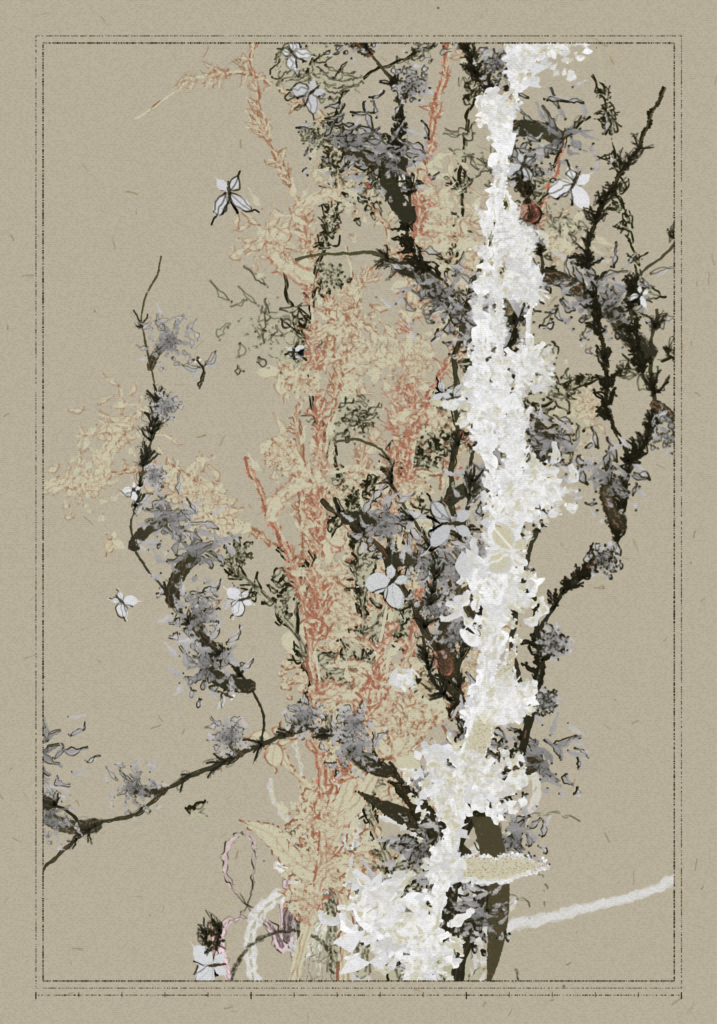
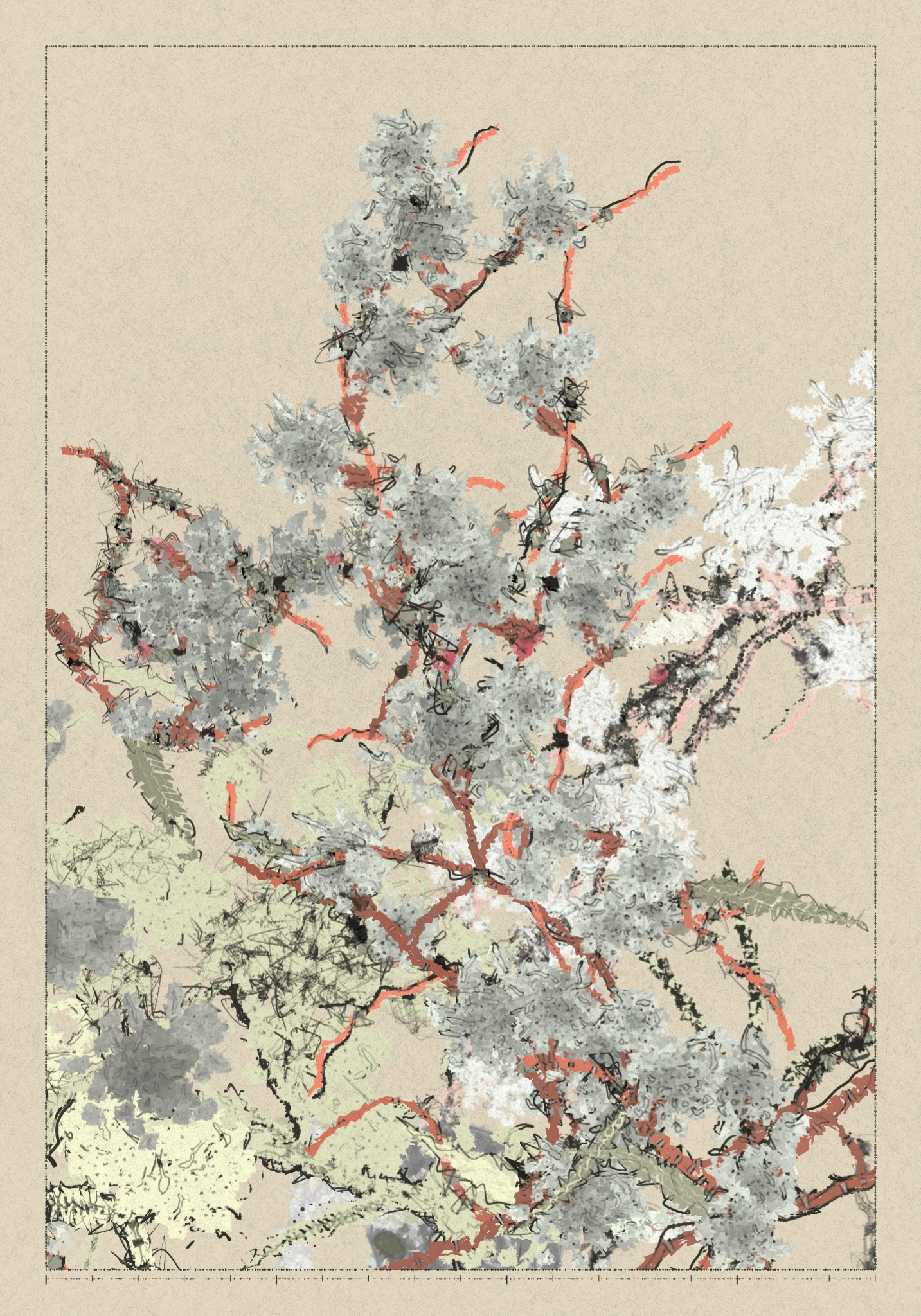
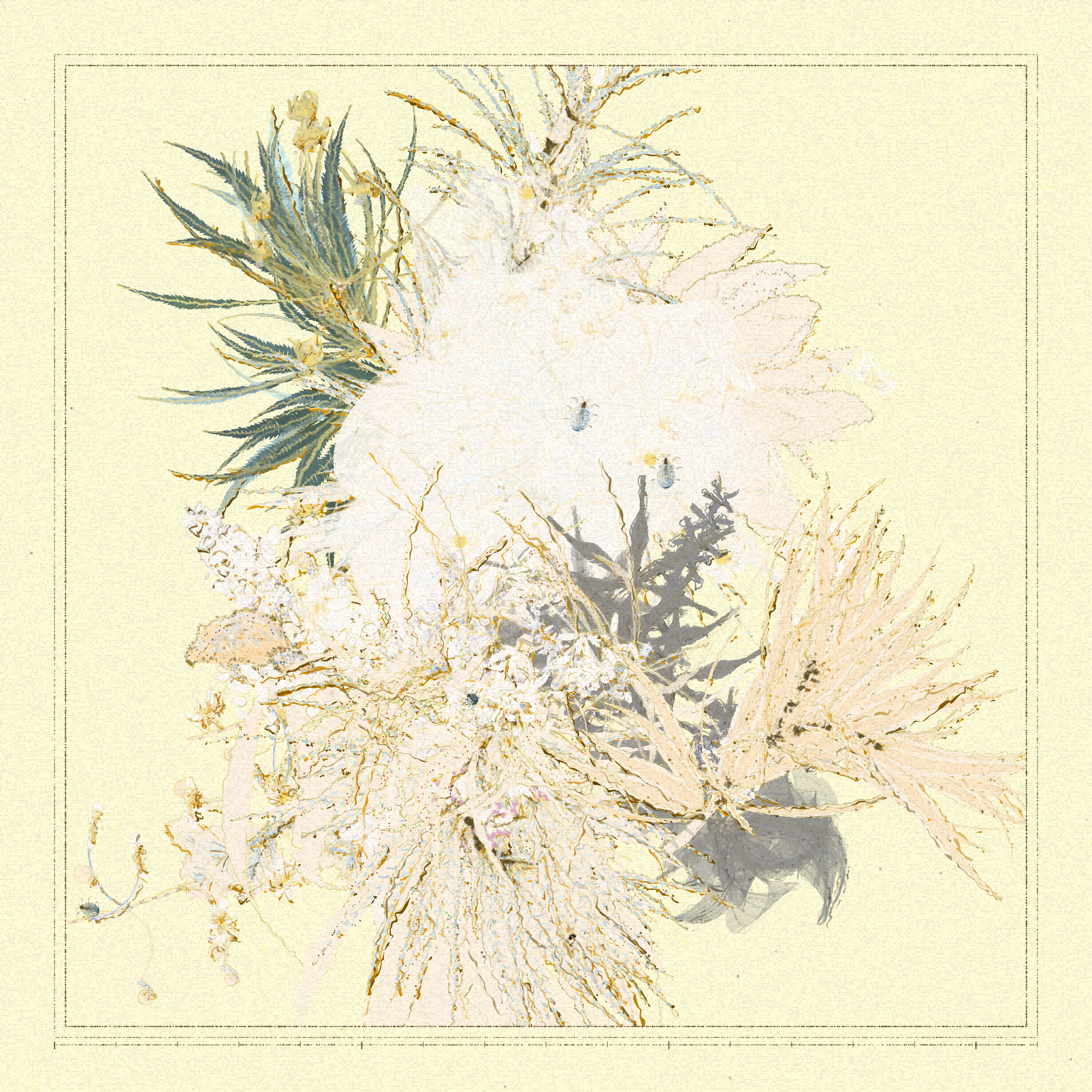
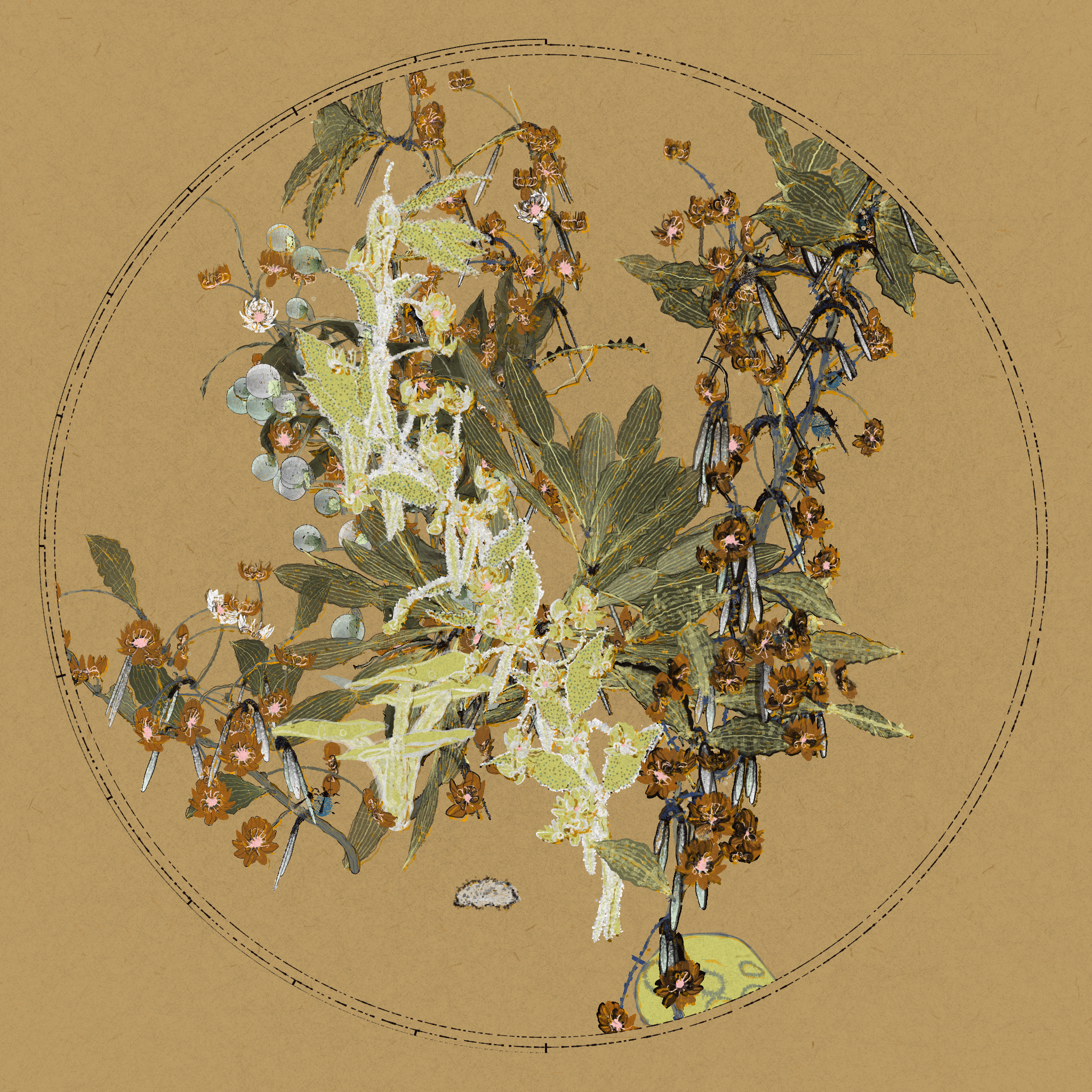
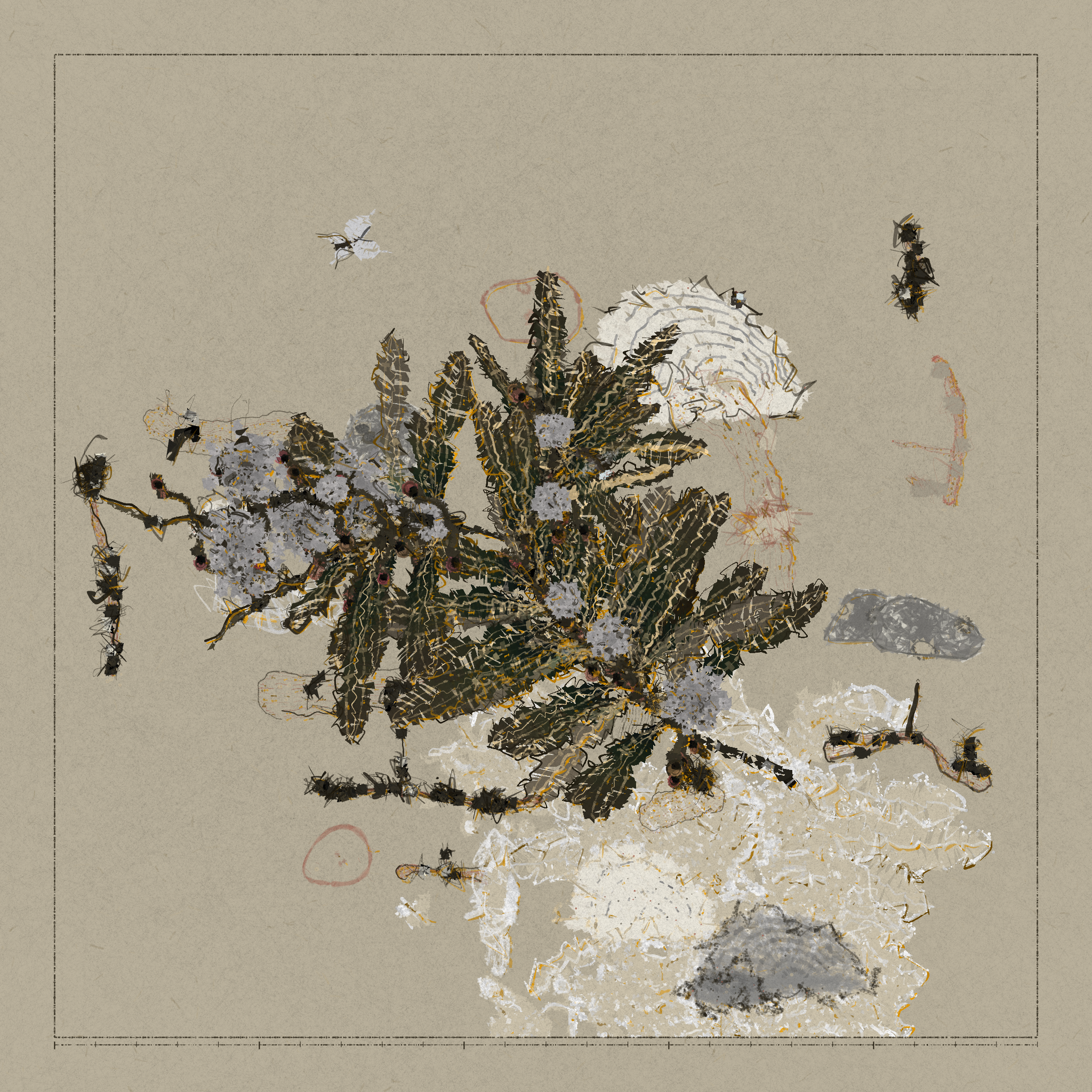
In PolyPaths, every image is more than just decoration — each frame serves a structural purpose. Much like traditional scientific illustration, you’ll often find small, almost invisible notches, symbols, or densities of linework in the corners — subtle cues meant to guide the eye and decode the work.

The layouts and frames in this series draw inspiration from my personal collection of botanical encyclopedias and museum specimen sheets. These references don’t just depict plants; they convey a measured world — proportions, annotations, specimen labels — all signaling: this is not merely an image, it is a system that has been observed, quantified, and archived.

That’s why each scene in PolyPaths follows its own visual syntax. Circular, rectangular, or elongated — each ratio has a corresponding type of framing. The outermost ring, often lined with fine notches, acts both as a loading bar during animation rendering and as a subtle indicator of plant count. In circular formats, these marks resemble the hour divisions of a clock.

You might ask: why include these at all?

Well, beyond helping me debug the number of plants on screen (yes, I’ve lost count in my own overgrown simulations), they offer an alternative rhythm of looking. When a scene gets dense and chaotic, these tiny markers become anchors — a way to count, navigate, and reorient.

And once you start noticing them, a new layer of viewing opens up. Perhaps this is where my deepest artistic inquiry lies: embedding hidden measurements and coordinates beneath the surface of organic growth, where the viewer, unknowingly, becomes the surveyor — part observer, part participant, part archivist.


隱藏在畫面裡的尺標

在《植徑集》裡,任何畫面都不只是裝飾,它們都被賦予了結構性的用途。就像傳統的科學繪圖,往往會在角落留下看似不起眼的刻度、符號與筆觸密度,它們其實是引導觀看、解構作品的一種方式。

這一系列作品採用了多種 layout 與外框設計,靈感來自我長期蒐集的植物圖鑑與博物館標本照。這些圖鑑不僅強調植物樣貌本身,也透過比例、標示、標本紙的格式與說明欄位,傳遞「這不是圖像,而是一個被測量過的世界」。

因此,《植徑集》的每一幀畫面,也都對應一套視覺語法:

圓形、方形、長幅,根據不同比例會出現不同的標示框。最外圈的那一圈微小刻線,既是動畫生成時的 loading bar,也是隱性地標示這群植物的數量。這些刻線,在圓形的外框中,形成類似時鐘的節點。

你可能會問:為什麼要加這些?

其實除了 debug 系統中植物數量的功能(沒錯,我也曾被自己畫面裡爆炸的植叢搞到數不清),它還提供了另一種觀看的節奏與方法——當畫面變得複雜、不易辨識時,這些刻線就成為計數與定位的依據。

而當你開始注意這些細節,也就打開了另一種觀看模式,也許這就是我創作時最深刻探勘,

讓「自然生長」的背後,藏著一套嚴密的尺規與座標,

而觀眾,在不知不覺中也成為測量者、參與者、紀錄者。

Training the Future Me: What a Real Agent Should Be

Lately, I’ve been hearing the word “Agent” more and more. People often ask me, “Can AI truly become an agent — someone who acts on your behalf?”

As someone who’s spent years working with generative tools, I still have my doubts. The truth is, none of the tools we use today can be called true agents. Sure, they can complete tasks — summarize notes, check your schedule, send emails — but they can’t decide for you. They don’t understand you.

The agent I envision is something else entirely. You’d tell it, “You’re my scheduling assistant,” and from then on, it would handle everything: resolving conflicts, suggesting reschedules, even talking to others on your behalf. You wouldn’t need to micromanage it — it would act in your spirit, guided by principles you set.

Right now, no AI system is truly wired that way. No one has connected all the necessary pieces into a working whole.

So in the meantime, I’m working on something else: training the future agent by feeding it myself.

My tone. My preferences. My decision patterns. The hashtags I use, the platforms I post on, the way I think. All of it. Because if we want AI to someday become us — or at least resemble us closely — we need to start giving it the right input now.

Many people talk about SEO, and honestly, training an AI isn’t so different. You’re leaving signals — breadcrumbs for the machine. Platforms like GitHub, Twitter, Medium, and personal websites are the places models can most easily learn who you are. Meanwhile, Facebook and Instagram are mostly closed off to major LLMs. So where you post matters.

In short, you’re not just creating content — you’re shaping which future AI gets to know you.

That’s why I believe: if we ever want to build our own Agent, the time to start feeding it is now. Strategically, consistently, maybe even a bit obsessively.

Polypaths | A Garden of Forking Paths

In nature, every plant emerges like a finely tuned set of parameters in motion.Phyllotaxy may present as opposite, alternate, or whorled; internode length adjusts with light; leaf margins vary between entire, serrated, or undulate.The angles of branching and the density of nodes together compose the posture and rhythm of a plant’s body.
These seemingly incidental traits are in fact the product of a deep and intricate logic—one shaped by time, adaptation, and systemic interaction.

To me, nature is the earliest and most profound generative artist.
Generative art, in this sense, becomes a way of reading its original language.Polypaths is a system I have cultivated since 2023.
In truth, its foundations were laid even before Equinox was completed.
It does not aim to imitate plants, but to understand them—
to explore how they branch, how they negotiate limits,
and how they thrive in the tension between order and chaos.

Each version of the work begins with the same initial conditions,
yet diverges through subtle shifts to form an outcome that is entirely unique.
This uncertainty is not mere randomness, but a structured openness—
a reverent acknowledgment of the world’s inherent multiplicity.

In programming, a “fork” refers to version control—
a split in the timeline where new possibilities emerge.
In life, a fork is a decision, a turning point, the shape of a fate.
And in Polypaths, it becomes the aesthetic core:
Each of us is shaped through countless bifurcations,
continuously generated by the choices we make.

棕櫚葉-drawPlam

我透過 drawPlam() 來探索 棕櫚葉的形態構成與生長模式。這不只是單純的葉片,而是一種 受結構規則與隨機變數共同塑造的形式——主幹的彎曲、葉序的排列、小葉片的角度變化,這些元素共同決定了葉片的展開方式,使它在固定的邏輯框架下仍具有多樣性。

棕櫚葉的整體形態由 主幹與小葉組成,其中 主幹長度 受到 meta.leafLength 及 finalNode 影響,在一定範圍內隨機變化,使葉片長度在 200 以上波動,而 主幹的彎曲 則透過 變形函數 定義,透過簡單的位移調整,使葉片帶有自然的起伏感。

小葉片的排列方式 依據 相對位置 relativePosition 在主幹上均勻分布,從 0.15 開始,到 0.92 結束,形成由基部到末端逐步展開的模式。葉片的數量在 12 到 18 之間隨機,確保每片棕櫚葉都略有不同。

葉片的生長角度 透過 基礎展開角 baseAngle 來確定,數值範圍介於 PI / 8 到 PI / 2.2,再加上小幅隨機偏移,使小葉片呈現扇形展開的效果。左右葉片的對稱性 來自於 leftAngle 與 rightAngle,它們在 baseAngle 的基礎上微調,使葉片能夠均勻展開。

寬度函數 中,葉片的橫截面形態被進一步塑造:前 60% 保持固定寬度,後 40% 緩慢收束至 0,確保葉片前端保有較完整的形態,而尾端則自然收斂,模擬棕櫚葉的尖細輪廓。

這個系統並非單一靜態形態,而是 透過結構邏輯、隨機數值與函數調控的參數組合,讓每片棕櫚葉都在相似的框架內擁有自己的變體。葉片的彎曲方式、排列順序、寬度變化,使 drawPlam() 成為一個 基於參數驅動的葉片生成結構,能夠在不同的輸入條件下生成略有差異的葉片形態。

Through drawPlam(), I explore the structural composition and growth patterns of palm leaves. These are not just simple leaves but forms shaped by a combination of structural rules and random variables—the curvature of the main stem, the arrangement of leaflets, and variations in leaflet angles. Together, these elements determine how the leaf unfolds, allowing for diversity within a fixed logical framework.

The overall form of a palm leaf consists of a main stem and multiple leaflets. The length of the main stem is influenced by meta.leafLength and finalNode, introducing a range of variation that keeps the leaf length above 200. Its curvature is defined by a deformation function, applying subtle positional adjustments to create a natural undulating effect.

Leaflet arrangement is based on relativePosition, evenly distributed along the main stem from 0.15 to 0.92, forming a gradual unfolding pattern from the base to the tip. The number of leaflets varies randomly between 12 and 18, ensuring that each palm leaf exhibits slight variations.

The growth angle of each leaflet is determined by the base expansion angle baseAngle, ranging from PI / 8 to PI / 2.2, with minor random offsets to create a fan-like distribution. Symmetry between the left and right leaflets is controlled by leftAngle and rightAngle, which are fine-tuned from the base angle to achieve a balanced spread.

The width function further refines the cross-sectional shape of the leaflets: the first 60% retains a fixed width, while the last 40% gradually tapers to zero. This ensures that the front part of each leaflet maintains a well-defined shape, while the tip narrows naturally, mimicking the pointed structure of real palm leaves.

This system is not a static form but rather a parameter-driven structure governed by logic, randomness, and function-based controls. The combination of curvature, arrangement, and width variations enables drawPlam() to generate palm leaves that adhere to a consistent framework while still exhibiting unique characteristics under different input conditions.

木樁 wood()

Post-botany(暫定)中,我透過 wood() 來探索木頭的生長與衰敗如何交錯並存。這不只是單純的木樁,而是一個能夠適應環境、逐漸變化的結構——裂痕、孔洞、子枝,甚至突刺,這些細節讓木頭在時間的推移下,依然能找到自己的發展方向。

木頭的形狀受不同因素影響,比如 寬度函數 決定了它的輪廓,使它不會只是單調的圓柱,而是帶有自然起伏的有機形態。而 裂痕與孔洞 則是時間與環境留下的痕跡,有些沿著木質紋理擴展,有些則突如其來地切開表面,讓整個結構變得更有層次感。

這個系統並非靜止不變——子枝的生長 讓每個木樁都可能在不同角度長出小枝,方向不固定,大小也各異,模擬出自然界中的不規則感。突刺 則是另一個變數,它們可能像荊棘般密集生長,也可能零星散布,讓木頭的表面帶有意想不到的細節。

我在這裡思考的,是如何讓這種自然的變化有它自己的規律。木頭不只是單純地向上生長,而是在不同時間尺度中被改變、分裂、甚至再生。這些細節,使 wood() 不只是靜態的物件,而是一種能夠「找到自己形態」的結構。


In Post-botany (tentative), I explore how wood grows and decays, intertwining over time through wood(). This isn’t just a simple wooden stake—it’s a structure that adapts and evolves, shaped by cracks, holes, offshoots, and even occasional spikes. These elements allow the wood to respond to time and its surroundings, finding its own way forward.

Its form is influenced by various factors. The width function defines its contour, ensuring it’s not just a uniform cylinder but an organic shape with natural irregularities. Meanwhile, cracks and holes mark the passage of time—some follow the grain, while others cut through unexpectedly, creating layers of texture and depth.

This system isn’t static—offshoots may sprout at different angles, varying in size and direction, mimicking the natural unpredictability of growth. Spikes, on the other hand, add another layer of variation, sometimes clustering like thorns, other times appearing sporadically, introducing unexpected details to the wood’s surface.

At its core, this is about discovering an inherent order within organic change. Wood doesn’t simply grow upward; it undergoes continuous transformation—splitting, shifting, and even regenerating over time. These details make wood() more than just a static object—it becomes a form that gradually finds its own way to exist.

美學中的拓荒-Pioneering in Aesthetics


在春分『equinox』中,我設計了一個版面生成器,讓看似隨機的構圖,其實被邊界所綁定,出血值是其中特別的設計,透過內縮以及快擴,版面會自己找到呼吸之道。

然而在后植物學『Post-botany』(暫定),我依然在找尋構圖的方法,植物有其往上長的特殊性,所以到底該如何順應其特性,找到對應之道,是我在完成風格後,下一個挑戰。

In Equinox, I designed a layout generator where seemingly random compositions are actually bound by invisible borders. One special element in this design is the bleed area—through contraction and expansion, the layout finds its own way to breathe.

However, in Post-botany (tentative title), I am still searching for a compositional method. Plants naturally grow upward, and understanding how to align with this characteristic while maintaining aesthetic balance is my next challenge after solidifying the visual style.